 English
 German

- Construction of the new world-scale hexamethylenediamine (HMD) plant in Alsace
- Customer: BASF
- Task: Preliminary planning of the scaffolding in 3D, project management, HSE and coordination
Customised solutions
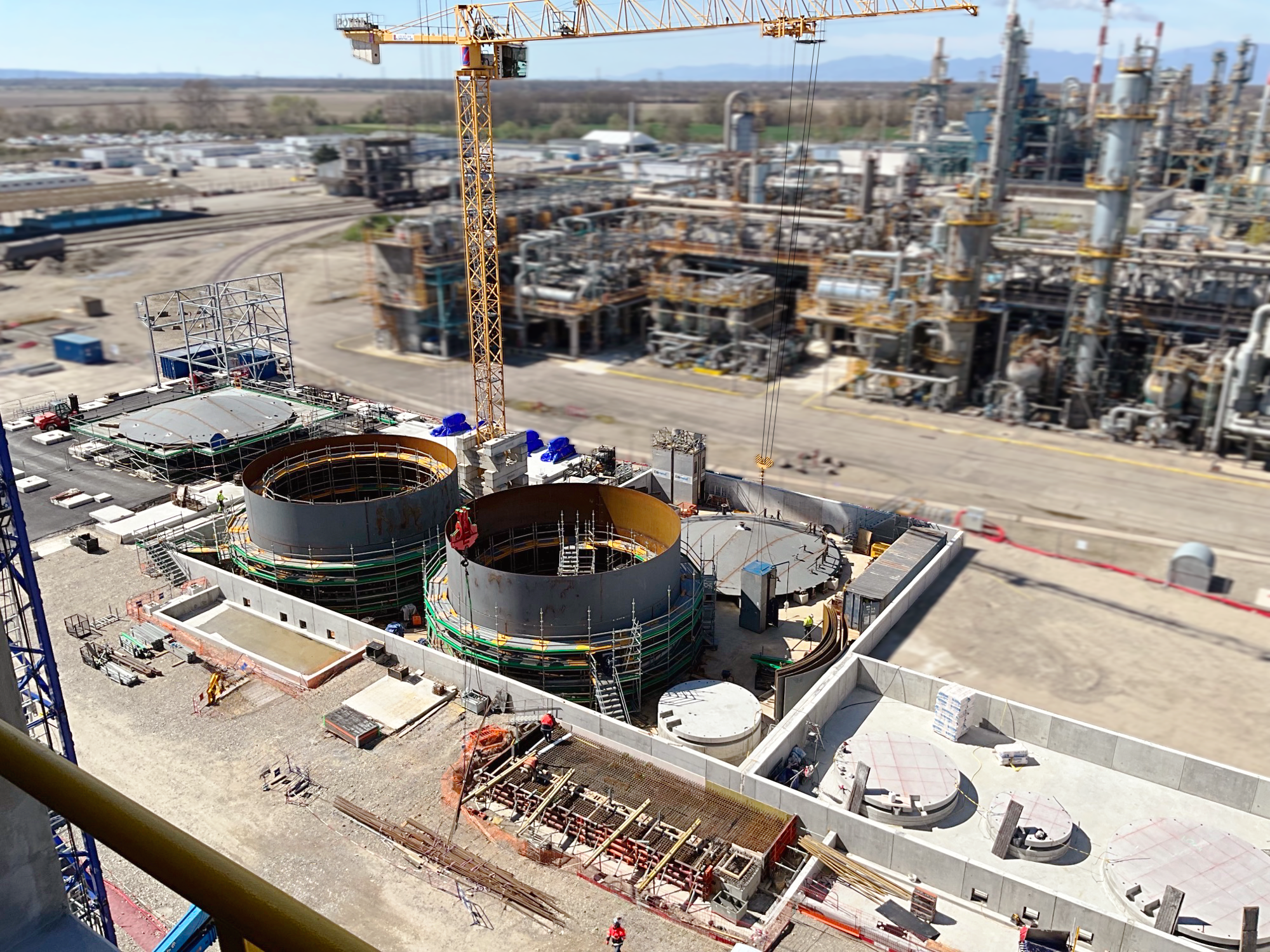
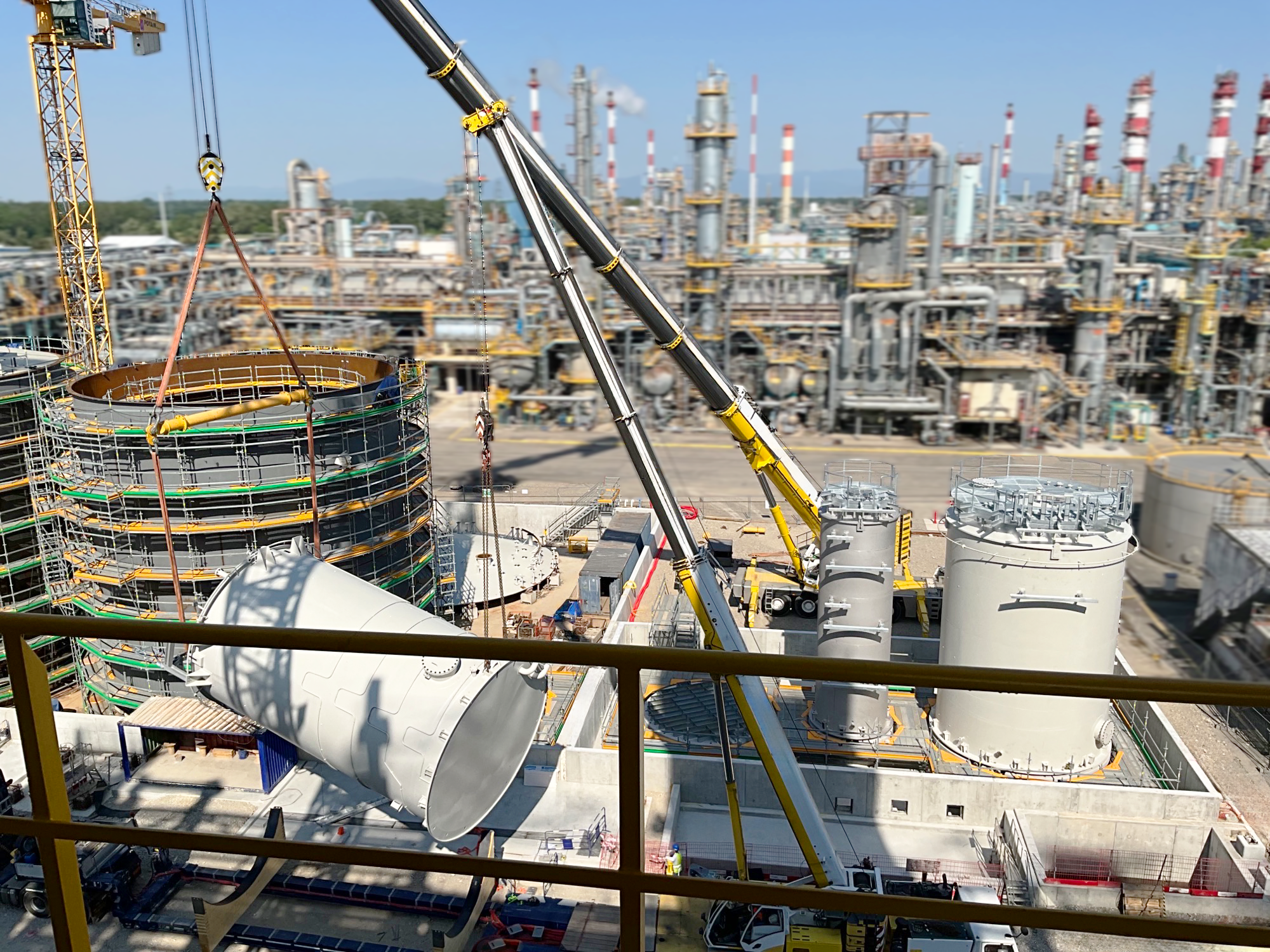
Customised scaffolding systems with PERI UP were successfully used for the installation of two 60 m long, insulated stainless steel tanks in reinforced concrete sarcophagi.
With the Tandem Project, BASF realized one of its most significant recent investments in Europe, committing a total investment in the mid three-digit million euro range to expand its production capacity for hexamethylenediamine (HMD). The new world-scale plant, located in the Alsace region of France, increases annual HMD capacity to approximately 260,000 metric tons and reinforces BASF’s strategic position in the polyamide 6.6 value chain.
HMD is a key precursor for high-performance engineering plastics used in automotive, electrical, textile and consumer applications. By strengthening backward integration and ensuring reliable European supply, the project represents a major milestone in securing competitiveness, operational resilience and long-term growth in a demanding global market environment. Construction began in 2022 and the plant was successfully brought on stream in 2025.
Our role as a partner
promaintain was entrusted with the comprehensive management of scaffolding engineering and execution throughout the construction phase. Our role extended far beyond traditional scaffold supply: we acted as an integrated engineering partner, aligning access solutions precisely with the evolving requirements of a large-scale chemical construction project.
From early planning stages to peak construction activities, our team coordinated scaffold design, logistics, erection sequencing and safety oversight in close collaboration with BASF and all involved contractors. Dedicated coordination leads for ISBL and OSBL scopes ensured alignment across interfaces, while integrated HSE supervision supported the project’s outstanding safety performance — over two million contractor work hours were completed without significant incidents.
Engineering Methodology and operational Coordination
Delivering scaffolding solutions for a world-scale chemical facility demands a methodology that combines engineering precision with dynamic site management. Using 3D scaffold models and BIM-based coordination, promaintain translated construction schedules into executable access concepts. Regular model review meetings with the client and contractors enabled early definition and continuous adjustment of scaffold requirements.
On site, this digital groundwork was transformed into structured execution. Five large tanks requiring simultaneous internal and external scaffolding created substantial coordination complexity. Scaffold erection had to mirror construction progress precisely to avoid disruption of mechanical and civil activities. Through proactive sequencing and constant communication with work fronts, we ensured uninterrupted access while maintaining structural integrity and compliance.
Logistical constraints, including limited laydown areas and long internal transport routes, required a dedicated logistics concept. Material flows were optimized to reduce congestion and ensure just-in-time delivery to work areas, supporting both efficiency and safety.
Performance, capacity and digital innovation
At peak, 1,704 tons of scaffolding material were installed on site. Four construction hoists provided vertical access up to heights of 80 meters, enabling safe and efficient personnel and material transport in demanding structural environments.
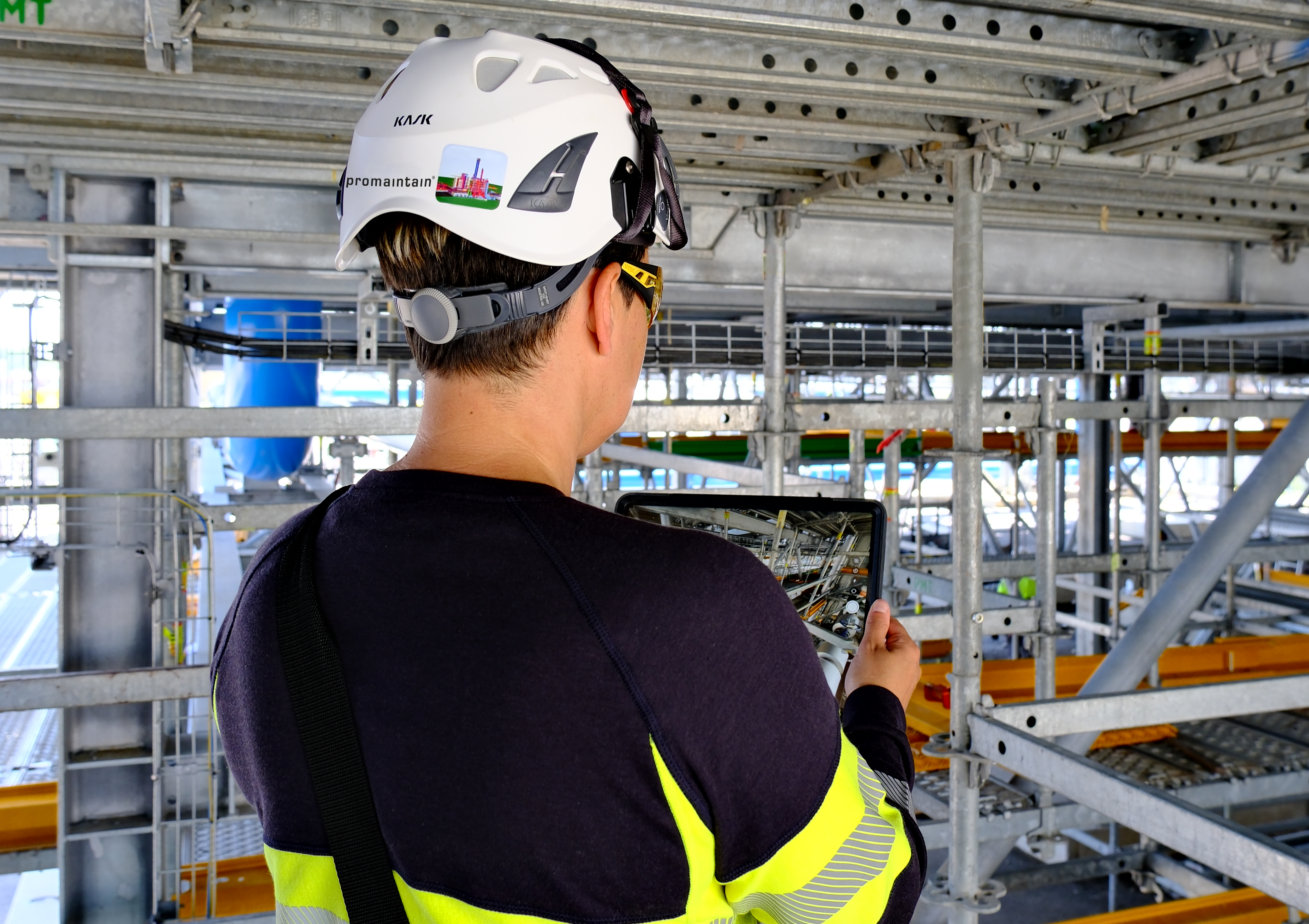
A defining feature of the project was the consistent use of Autodesk BIM 360 as a central collaboration platform. Documentation, communication and billing processes were managed digitally, while scaffolders on site worked directly with tablets connected to 3D planning models. This integration of engineering data with field execution reduced errors, increased transparency and established a benchmark for digitally supported scaffolding operations in large industrial projects.
From our perspective, ensuring a structured approach, consistent communication, and a common technical understanding across all stakeholders is key to achieving project goals.